

St. Brigid's Day & Imbolc
Some things are seasonal. Some work isn't meant to be done everyday, but only at special times of year. Perhaps it's just nice to try to feel in tune with natural rhythms and accept that some things are only for now. St. Brigid's Day, February 1, is one of those times.

Traditional St. Brigid Cross in Gold by Stephen Walker.
The Ancient Festival of Imbolc
To ancient Gaelic peoples, it was called Imbolc, one of the seasonal festivals like Samhain (Halloween), Beltane (May Day), and Lughnasadh. Imbolc marked the end of winter and the coming of Spring—a Spring whose strength could supposedly be poetically felt even if there was still three feet of snow on the ground. (It would eventually be the next day, February 2, where the watching of clouds and shadows was used to determine if the weather itself was going to get with the program.)
There were many traditions to bless the coming Spring, from blessing cattle, clothing, and food to the cleaning and airing out of homes. Eventually, February 1 became the feast day of St. Brigid, patroness of Ireland, of babies and midwives, of cattle and milkmaids, of poets and scholars, and—particularly relevant—of metalsmiths.
Related: Learn more about how Imbolc connects to the Celtic origins of Mother's Day and the tradition of honoring the feminine divine.

Saint Bride by John Duncan (1913)
St. Brigid's Connection to Jewelry
St. Brigid has multiple connections to jewelry. One of her miraculous acts of charity involved saving a young woman from false legal charges by recovering a silver brooch, a story the record of which allows scholars to make many inferences about the value and distinctness of medieval Celtic jewelry. But far more well known is the St. Brigid's cross.

Saint Brigid Medal — a collaboration between Stephen Walker & Jack Brown.
The Legend of St. Brigid's Cross
There are older accounts of Neolithic sun-crosses, and even Brigid's specific story takes many forms, but the basics are that a dying chieftain (possibly Brigid's own very difficult father) was raving on his death bed, and Brigid was asked to sit with him. As she waited for the shouting to lessen, she picked up a few reeds from the floor, where they were strewn as basic contemporary 'carpeting.' She then began to weave a cross and, when the chieftain calmed enough to ask what she was doing, to explain her religious faith. Brigid accomplished a death bed conversion and established an eventual tradition.
St. Brigid had complex connections to the hearth, including, for several centuries, a sacred flame dedicated to her in Kildare, and fire is one of the things against which these specially woven-crosses were said to protect the home.

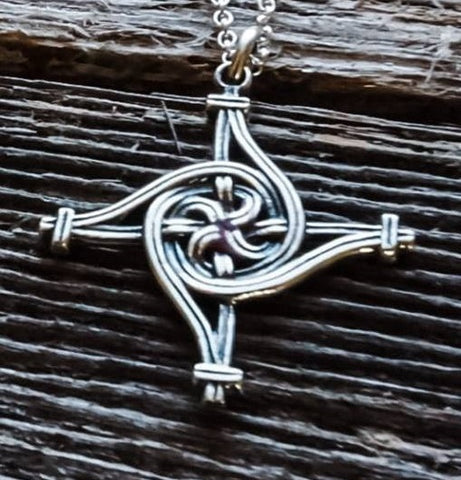
Saint Brigid Cross in Sterling Silver by Stephen Walker.
Crafting the Cross at the Proper Time
St. Brigid's crosses are traditionally woven on the eve of St. Brigid's Day. But in 1999, that eve fell on a Sunday, and Stephen Walker found it almost impossible to plan cross-making into his schedule. He still prides himself on having been given 'special dispensation' by Lorraine Macdonald of the Dal Riada Celtic Heritage Trust to stretch the appropriate time to a few days earlier.
The master model from that design still makes many things a decade later. Stephen and his colleagues, however, have made many new versions of the cross since then, always in the days leading up to St. Brigid's Day, in the time of year when—whether the weather knows it or not—Spring is coming.
The 2019 Polar Vortex Creation
This year the Eve of St. Brigid's Feast Day brought us a polar vortex. Our village experienced temperatures of -18°F with wind chill, and temperatures across the country reached as low as -66°F. It was hard to see the strength of spring on the horizon with such frigid weather, and yet St. Brigid's Day and Imbolc still came. To celebrate the eve of St. Brigid's Feast Day, Stephen crafted a newly designed St. Brigid's Cross from which all its future pieces will be made. With it we celebrate the promise that even on the coldest days spring is still on the horizon. At any moment there is still hope for salvation.

New Saint Brigid Spiral Cross Design by Stephen Walker.
From Design to Finished Piece
Each St. Brigid's Cross begins as a hand-drawn design, then moves through our lost wax casting process. Here's a glimpse of how the 2019 Spiral Cross was created:


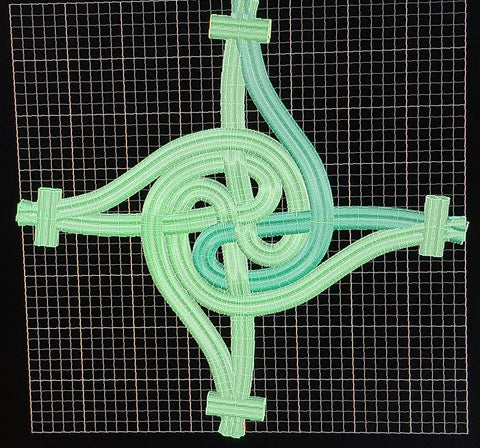
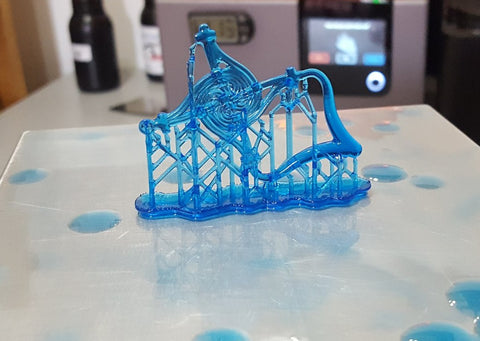

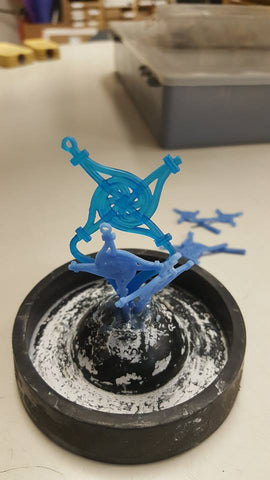
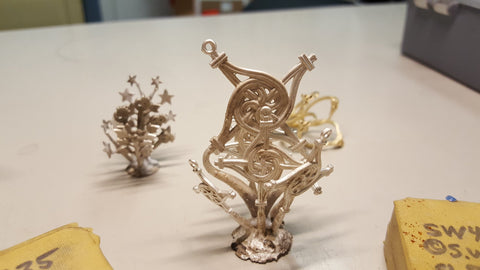
From sketch to digital model to 3D print to mold to casting to finished piece.
Shop St. Brigid's Cross Jewelry
Honor the patroness of Ireland and metalsmiths with a handcrafted St. Brigid's Cross in sterling silver or 14K gold.
Shop St. Brigid's Crosses All Celtic CrossesExplore Celtic Traditions & Symbolism
- Celtic Origins of Mother's Day — Imbolc, Mothering Sunday, and honoring the feminine
- Celtic Cross History & Symbolism — The meaning behind the ringed cross
- Our Lost Wax Casting Process — How we create each piece
- The Modern History of Celtic Jewellery — Stephen Walker's book on the Celtic Revival

About the Author
Stephen Walker has been handcrafting Celtic jewelry—including St. Brigid's Crosses—in Andover, NY since 1984. As a metalsmith, he finds it especially meaningful to honor St. Brigid, the patroness of his craft.
Comments on this post (1)
These are all so beautiful. I imagine that she would be very pleased. Thank you for sharing your phenomenal talents and insights. Blessed be…
— Eve