
Walker Metalsmiths Celebrate's the Celtic Origins of Mother’s Day
Mother's Day is on the horizon, and people around the world are looking for ways to honor their mothers for all they do. While the secular Mother's Day holiday celebrated in the United States and Canada is relatively recent, Mothering Sunday has been celebrated on the fourth Sunday of Lent since the 1500s in Ireland and the United Kingdom—originally a religious holiday focused on each family's mother church that evolved into a recognition of motherhood itself.
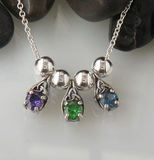
Today, gift-giving has become a tradition for both Mother's Day and Mothering Sunday, with symbolic presents such as Walker Metalsmiths hand-crafted Celtic crosses or Celtic pendants featuring children's birthstones. It should come as no surprise that there are religious origins to Mother's Day, as many Celtic traditions have become intermingled with Christian holidays over the centuries.
Celtic Traditions That Honor Motherhood
While a specific holiday called "Mother's Day" isn't a part of Celtic heritage, various Celtic traditions and holidays have long honored the role of women as wives, mothers, and nurturers. From the ancient festival of Imbolc to the symbolism of the Trinity Knot, Celtic culture recognizes the power of women in many meaningful ways. Explore more Mother's Day traditions rooted in Celtic heritage.
Imbolc and Motherhood
Imbolc, an ancient Celtic celebration of spring, fertility, and renewal, recognized the strength of women through the personification of motherhood symbolized by the pagan goddess Brigid—an ancient goddess of fertility. Each year on Imbolc, she was celebrated and invited into people's homes by families hoping for her blessings in the coming year.
St. Brigid's Day
Although she never married or had children of her own, St. Brigid, one of the most beloved of Celtic saints, is seen as the protector of midwives and mothers. She was an incredibly nurturing woman who cared for and converted her dying father, weaving the St. Brigid's cross to teach him about Christianity.
Walker Metalsmiths has interpreted that cross in more than one style of hand-crafted Celtic necklace. St. Brigid also fed the poor and became a nun and later an Abbess, becoming the mother figure to an entire chapterhouse of nuns.
Trinity Knots: Symbols of Womanhood
As a symbol of the importance of women and their roles in our lives, the trinity knot can be interpreted in many ways. The most traditional is the three stages of womanhood represented in ancient Celtic lore: Maiden, Mother, and Crone. Each age represents an aspect of the feminine that is esteemed in Celtic culture—the innocence and purity of the maiden, the nurturing and love of the mother, and the wisdom and guidance of the crone.
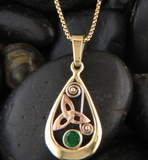

The trinity knot, sometimes called the triquetra, can also represent mother, father, and child. This makes it a lovely Celtic necklace for Mother's Day or any special occasion when you want to recognize a special familial bond.
More recently, it has become a beautiful tradition for a grandmother, mother, and granddaughter to wear matching triquetra Celtic pendants to represent the unbroken bond of maternal love through the generations.
Honor Your Mother with Celtic Heritage
There are innumerable ways within Celtic traditions to honor your mother and all the women who have enriched your life. Let Walker Metalsmiths help you find the perfect gift for these occasions.
Shop Celtic Pendants Birthstone CollectionExplore Celtic Symbolism & Traditions
- Celebrating St. Brigid's Day — Learn about the traditions honoring Ireland's beloved saint
- Celtic Knot Symbolism — Discover the meanings behind Celtic knotwork designs
- Celtic Cross History — The complete history of the ringed cross tradition
- Trinity Knot Collection — Browse our handcrafted triquetra jewelry

About Walker Metalsmiths
Since 1984, Stephen Walker has been handcrafting Celtic jewelry in Andover, NY, combining scholarly research of ancient Celtic art with master craftsmanship. Each piece tells the story of Celtic heritage and tradition.
Leave a comment