Walker Metalsmiths Blog

George Bain Hunting Rug at Walker Metalsmiths

George Bain Hunting Rug at Walker Metalsmiths

Visitors to Walker Metalsmiths' showroom on Main Street in Andover, NY are often struck by the beautiful Celtic carpet displayed on the wall. On a recent trip to Scotland, I learned more about the history of this rare and exquisite treasure of Celtic art.

George Bain: Father of the Celtic Renaissance

The Scottish art teacher George Bain (1881-1968) is often considered the father of the Celtic Renaissance. Several years after his retirement from teaching high school art in Kirkcaldy in 1946, he saw the publication of his book, Celtic Art: The Methods of Construction and the launch of the production of several rug designs by the Kidderminster carpet firm of Quayle & Tranter. His work continues to inspire Celtic artists around the world today.

Around twenty years ago I spotted our rug on an internet auction website. We displayed it on the wall in our Fairport, NY store for several years. When we opened our new showroom in Andover in 2018, the Hunting Carpet contributed to the vibe of the restored historical building.

Researching the George Bain Collection

Earlier in 2022 I was invited to join an advisory panel for the George Bain Collection that is under the stewardship of Groam House Museum in Rosemarkie, Easter Ross, Scotland. My relationship with Groam House goes back 25 years and I have visited several times. Since Sue and I were going to be in Scotland for part of our trip to participate in the Ninth International Insular Art Conference in Durham, England in April, I made arrangements to visit again and have a closer look at the collection.

George Bain Collection archives at Groam House Museum

The George Bain Collection archives at Groam House Museum, Scotland.

Dr. Jo Clements, the George Bain Curator and project manager, met with me and allowed me access to many of Bain's letters and original drawings. I made several very interesting discoveries. Regarding the Hunting Carpet, I found the original contract between Bain and the manufacturing firm stating that he would be paid ÂŁ150 per year for his designs starting in 1951. Correcting for inflation that would be around ÂŁ5,500 today, or over US $7,000.

The Authenticity Label

There was also correspondence about the authenticity label. On our carpet the label is missing, so this is very interesting as it tells what message George Bain intended the design to convey and his ideas about the general meanings he assumes for common motifs in Celtic art.

Authentic Celtic Art

Guarantee Mark of

THE COLLEGE OF CELTIC STUDIES

Drumnadrochit, Inverness-shire

"Hunting" Carpet

Designed by George Bain

Motifs & Their Meanings

CREATION: man, beast, bird, reptile, fish, insect, plant
WISDOM: reptile
KNOWLEDGE: salmon and sturgeon (past, present, future)
FRIENDSHIP/LOVE: interlacing birds
ETERNITY: continuity of interlacing knotwork and keys
UNITY: interlacing knotwork
SAFEGUARD AGAINST EVIL: counter sunwise spiral swastika
HUNTSMAN: with horn, stag, hind and hounds
DIARMID AND THE BOAR

Two Eras of Celtic History

An interesting point about this very ambitious and complicated composition that I think is noteworthy: the human figures are dressed in the costume of two very different eras, both of which figure heavily into the idealized past.

The kilted figures appear to be from the 17th or 18th century Jacobite period. This period of history was greatly romanticized by the novels of Sir Walter Scott and more recently by the Outlander novels and video series. The older costume of the mounted figures is derivative of the carvings on the early medieval Pictish stones of the 7th to 10th centuries.

Although Bain frequently referenced such foundational masterpieces as the Irish Books of Kells, Durrow and the Northumbrian Lindisfarne Gospels, his observations were based on illustrations from books. It was the elaborately carved Pictish sculpture of his native Northeast Scotland that he had the most direct contact with the actual original artwork.

See the Hunting Rug in Person

Visit our showroom in Andover, NY to see George Bain's Hunting Carpet and explore our collection of handcrafted Celtic jewelry.

Plan Your Visit →

Explore Celtic Art & Symbolism

Stephen Walker, Celtic jewelry artisan

About the Author

Stephen Walker serves on the advisory panel for the George Bain Collection at Groam House Museum. He has been handcrafting Celtic jewelry inspired by the Celtic Renaissance tradition since 1984.

Learn more about Stephen & Susan Walker →

Continue reading

Embracing Shamrockery

Embracing Shamrockery

Many years ago my wife's relatives organized a family reunion. The invitations were festooned with green clip-art shamrocks. Even though the gathering was a picnic in the summer, the party decorations had a sort of Saint Patrick's Day theme. As a professional designer craftsman who specializes in Celtic art, I was disappointed with what I was perceiving as a kitschy portrayal of the American family's Irish roots.

Let's face it, much of the green-beer revelry and kiss-me-I'm-Irish plastic vulgarities that come out around the middle of March every year are hardly consistent with the sophistication of such great masterpieces of Celtic heritage as the Book of Kells or the Tara Brooch. This is the Celtic identity that I embraced.

In the late 1960s, when I first was exposed to the medieval tradition of interlaced and complex geometric abstractions that are known as Celtic art, it was special, rare and exotic. Those that I met who recognized and displayed Celtic art seemed to me to have more sophisticated expression of Irish heritage than the shamrock people. It was the same with Irish music. The popular toora-loora-loora songs and Vaudeville Irish ditties had become the stereotypes of the American Irish identity. I was far more impressed by traditionalist musicians such as The Chieftains.

Six years in art school had made me something of a snob. The shamrock motif seemed to me low brow. But there is obviously something to it. Maybe it was just overdone. My own use of interlaced designs, spirals and key patterns, though rarely encountered in mainstream culture before around 1990, have become far more common in recent years. The Celtic knot-work that was rare in modern decorative arts during my youth is now so mainstream that you will see it on the Saint Patrick's Day tee shirts on sale at Walmart. So much for my highbrow Celtic motifs!

Sterling Silver St. Patrick's Cross with shamrock

Sterling Silver St. Patrick's Cross

Handcrafted Shamrock Jewelry

Authentic Irish symbols crafted with the same care as medieval masterpieces. Each piece honors both traditional heritage and artistic excellence.

Shamrock Pendants → Shamrock Crosses → Shamrock Earrings →

In modern Ireland, shamrocks are rarely encountered as a banner at someone's home, as you so often see in America. Shamrocks in Ireland are usually facing the tourist's gaze, quite likely pandering to the appetite for symbols of Irish identity sought out by the Irish-American tourists. Look a little deeper and you will see many surviving shamrocks on monuments and decorating antiques from the nineteenth and early twentieth centuries. This was the period of the largest emigration out of Ireland, and into America. Apparently, a century ago in Ireland, the shamrock was used in a popular way much more than today. As I realized this my prejudice against the shamrock as a kitsch began to lose confidence.

My adventures have taken me on frequent trips to Ireland where I have met and become friends with some excellent Celtic artists and craftsmen. Aidan Breen, a Dublin based silversmith, is held in high esteem by his countrymen. His reputation as one of the leading designer craftsmen working in the Celtic genre has landed his work in such high-status collections as the Company of Goldsmiths permanent exhibit at Dublin Castle and the National Museum of Ireland. Aidan Breen has made some exquisite shamrock themed jewelry. If shamrocks are good enough for him, why should I hold back?

Aidan told me, "It is a particular type that looks down on the Shamrock, probably because it's popular with the majority of ordinary people. Everyone I know wears the Shamrock on Saint Patrick's Day. It also adorns the jersey of both the Irish soccer and rugby teams. It is a symbol the crosses the sectarian divide."

Celtic Shamrock Cross with gemstones in gold

Celtic Shamrock Cross with Gemstones

The History Behind the Symbol

Between visiting museums, reading, attending lectures and conferences, I have gained a better understanding and appreciation for how and why the shamrock has emerged as such a powerful symbol of Irish identity. A coin introduced in 1641 is the earliest surviving artistic illustration associating Saint Patrick using the three leafed shamrock. The Saint Patrick's copper illustrates the Ireland's patron saint explaining the Christian mystery of the Holy Trinity with a shamrock. The story was certainly already well known before this half penny coin was issued. The robed Patrick, with his bishop's crosier and miter, holds high a shamrock that is proportionally as large as his head. Patrick stands before a crowd receiving his teaching with Dublin coat of arms crowded into the tight composition.

St. Patrick's Copper Half Penny from 1641

St. Patrick's Copper Half Penny Coin, circa 1641

The shamrock, and the color green, emerged as symbols if Irishness in military regalia, both among Irish regiments fighting for the British Crown and among rebel movements. Irish soldiers serving in the British army organized a Saint Patrick's Day parade in New York in 1761. The rebel Society of United Irishmen, whose fight for independence failed in 1798, rallied under a green flag emblazoned with an Irish harp, they also used the shamrock among their symbols. The harsh treatment of the United Irishmen after their defeat was popularly recalled in the ballad, Wearing of the Green, which laments "they are hanging men and women for the wearing of the green."

Celebrate Irish Heritage

From shamrocks to Claddagh rings and Celtic crosses, explore symbols that carry centuries of Irish history.

Browse Celtic Jewelry → Irish Pendants →

From Famine to Symbol of Identity

Fast forward to the Potato Famine of the 1840s. Nationalism dominated Irish thought as the desire for independence increased. In the decades following the great tragedy of the famine the restoration of a sense of Irish national identity became something of a cult. In the applied arts several motifs became emblematic of Ireland: the harp, the wolfhound, round towers, the Celtic cross, and the shamrock.

Of the millions of Irish who left Ireland, some fled to avoid prosecution for their nationalist politics, while most were driven out by hunger. Regardless of their reasons for leaving, a patriotic sense of Irish identity was strong among the exiles and carried on through the generations of their descendants. The song, the Wearing of the Green continued to be popular, but in America no one was being hanged for it. Among the poor Irish immigrants and their offspring, the only green they might afford to wear on Saint Patrick's Day might be as simple as a green paper shamrock pinned to the lapel. The paper shamrocks that may seem today like trite, nostalgic cultural appropriations are in fact a survival in folk memory of an authentic and powerful emblem of heritage, a reminder of past suffering and a joyful celebration of belonging.

Shamrock Heart Knot Pendant in sterling silver

New design 2021 Shamrock Heart Knot Pendant

It has been nearly twenty years since I shed my aversion to shamrockery. I am convinced that the shamrockery of the American descendants of Irish immigrants preserves something from an earlier time. I no longer cringe when I see the over-the-top get-ups at festivals and parades. Some of the relatives at that family reunion now own, and hopefully treasure, shamrock jewelry that I designed and made. If any of you are reading this, please forgive my arrogance. You were right and I didn't get it. Embrace the shamrock!

Shamrock jewelry collection

About the Author

Stephen WalkerStephen Walker is the founder and Master Craftsman at Walker Metalsmiths. With over 40 years of experience in Celtic design, Stephen has traveled extensively throughout Ireland and Scotland, studying ancient Celtic art and building relationships with traditional craftsmen. His work is informed by rigorous historical research combined with masterful metalworking technique.

Original designs © Stephen Walker

Continue reading

The Walker's Trip to the British Isles

The Walker's Trip to the British Isles

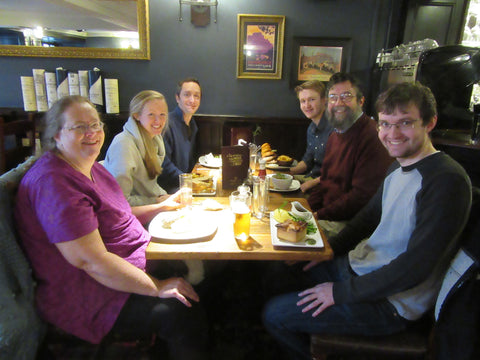
Back to the work bench now after a two week tour of the British Isles. We started out in London, Sue and I, with our sons Donald and Stephen, daughter Maggie and her husband Eric. We had a lovely dinner with a medieval Celtic metalwork expert friend who invited us all to her home.

Dinner in Edinburgh

The Walker family from left to right: Sue, Maggie, Eric, Stephen, Steve, and Donald.

The boys spent Saturday at the Chelsea/Everton football match. A great Premier League game that ended in a draw. I spent the weekend at a conference on the Celtic Revival held at the British Museum while the ladies had a leisurely weekend on the town.

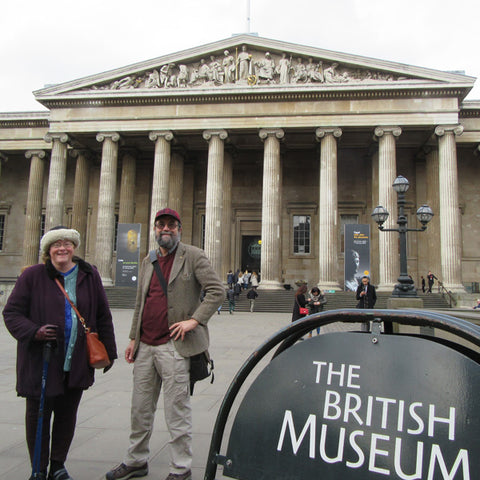
The conference was in conjunction with a feature exhibit at the British Museum called “Celts; art and identity," which was well attended by top scholars and researchers. It was a thrill to me that two of the speakers told me that they had read my book, “The Modern History of Celtic Jewellery”. On Monday we went to the British Museum as a family and saw the exhibit and spent most of the day seeing the many incredible displays that are there.Steve Walker at the British Museum

Steve and Sue Walker at The British Museum.

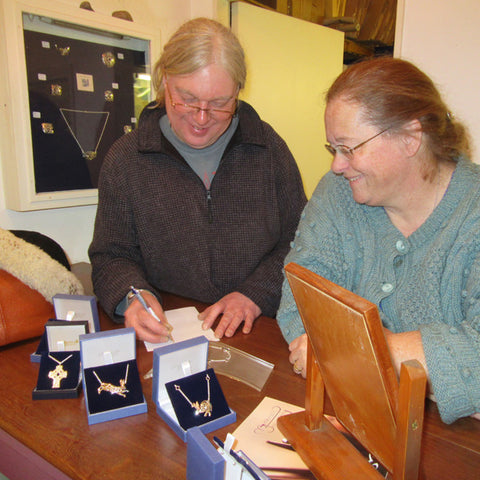
Later in the week we took the train North to Scotland. There had been some snow earlier in the week, so the Borders were especially picturesque. Getting into Glasgow we stayed with our friends the Caldwells.  Russell Caldwell is a fine Celtic jeweler, whose work was being sold at the British Museum during the Celts exhibit mentioned above.Sue Walker and Russell Caldwell

Sue Walker with Russel Caldwell.

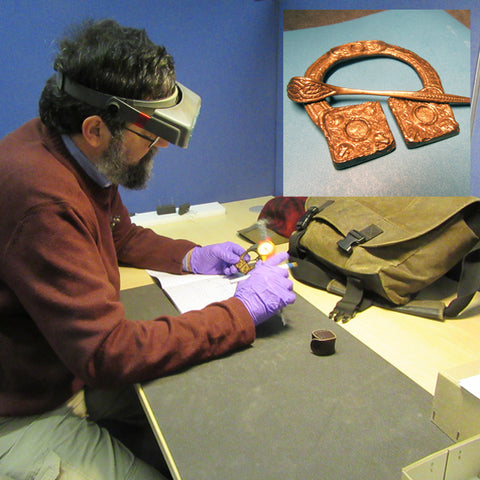
Thursday we all headed to Edinburgh for the day. I had an appointment with the curator at the national Museum of Scotland to examine an electrotype impression of an 8th century Pictish brooch. This brooch was copied by the museum in 1888, but somehow the private owner managed to lose the original! The plan is to make a copy using the original technique of carving a mold in plaster and casting it in silver. This would serve as a demonstration of how these early Celtic smiths worked. The brooch is known as the Banchory Brooch, after the location it was found in the 19th century. My great-grandfather George Watt was born in Banchory, which is in Aberdeenshire.

Banchory Brooch and Steve Walker

Steve Walker examining the Banchory Brooch.

While in Scotland we went to an excellent concert at the Celtic Connections festival. The concert was students and faculty of the Gaelic College on North Uist, Outer Hebrides, singing, playing pipes, fiddles and other instruments.

Maggie and the boys all headed back to the US on the weekend, but not until after we all went to another football match. We saw the Celtics play St. Johnston at Parkhead. (Celtics 3 – Saints 1). Sue and I stayed on for business. We went to a giftware show at the Glasgow SECC and placed a few orders for the shop.

Steve, Sue, Stephen, and Donald Walker at a Celtics game. 

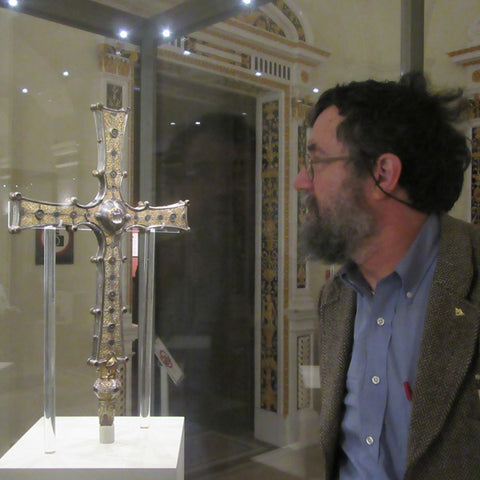
The Caldwell’s served us a supper of haggis, neeps and tatties in honor of Rabbie Burns Day, which is an iconic occasion to be in Scotland. But business called and we had to take leave of their fine hospitality and head to Dublin for another trade show and museum visit. Cross of Cong and Steve Walker

Steve Walker examining the Cross of Cong.

With only three days and two nights in Dublin we managed to shop for more interesting stock for the shop as well as give the 12th century Cross of Cong a good look over, with a tentative plan to do some experimental reproduction work to discover how the openwork interlace panels might have been crafted. We were very pleased to meet some new craftsmen at the trade fair and also to catch up with old friends. We had a delightful dinner at Captain America with silversmith Aidan Breen and plotted a revival of the Modern History of Celtic Jewelry exhibit for Andover this coming March.

Aidan Breen and Sue Walker eating dinner at Captain America.

It was yet another exciting vacation for the family, as well as a successful trip for our business and scholarly pursuits.  It's always so nice to meet up with other Celtic scholars and craftsmen, and the whole family thanks the folks of the British Isles for the warm hospitality extended to us at every stop.  We're looking forward to our next trip abroad, but for now we're happy to be home and back to routine.

Continue reading

The Modern History of Celtic Jewellery: 1840-1980

The Modern History of Celtic Jewellery: 1840-1980

📚 Stephen Walker is co-author of the definitive book on this subject — bringing scholarly expertise to every piece we create.

From the recovery after the Irish Potato Famine in the 1840s to the booming Celtic Tiger of the 1990s, a revival of the ancient traditions of Celtic jewelry has become a part of how the Irish, as well as the Scots, Welsh and other Celts have expressed their cultural identity. Usually the story of this tradition focuses on very old prototypes—the museum pieces turned up by archaeologists or the legend of the original Claddagh ring. In our imagination, we connect the popular Celtic jewelry of today with the distant past. But that link with the ancient style was very much influenced by what others had done in more recent history.

Four Experts, 150 Years of History

The story is told by four authors, each bringing unique expertise to this comprehensive history:

Tara Kelly

Writes of the early Celtic Revival manufacture of facsimiles of medieval Irish metalwork in Victorian Dublin and how that enterprise led historical Celtic jewellery to become iconic symbols of Irish identity.

Mairi MacArthur

Tells the story of Alexander and Euphemia Ritchie who created the foundation for modern Scottish Celtic jewellery on the Isle of Iona in the early 20th century.

Aidan Breen

Himself a pioneer of the late 20th century Celtic Renaissance, recalls his career beginning with an apprenticeship with Dublin silversmiths which trained him in the traditions of the older Celtic Revival.

Stephen Walker

Craftsman and collector, brings the story together as it spans 150 years—from Scottish pebble jewellery to the innovative modern Celtic creations of the Arts and Crafts Movement.

69 color photographs and 29 black and white illustrations
Available on Amazon →

Why History Matters to Our Craft

Understanding the history of Celtic jewelry isn't just academic interest—it directly informs the work we do at Walker Metalsmiths. When Stephen designs a new Celtic cross or trinity knot piece, he draws on decades of research into how these traditions evolved. This scholarly foundation is what separates authentic Celtic jewelry from mass-produced imitations.

The Celtic Revival masters like George Bain and the Ritchies of Iona established the visual language that contemporary Celtic artists like John Urban and Stephen Walker continue today. This unbroken lineage of craft knowledge is what we mean by "Celtic Renaissance."

Experience the Celtic Tradition

Each piece we create carries 150 years of Celtic Revival tradition—informed by scholarship, executed with master craftsmanship.

Shop Celtic Jewelry Meet the Walkers

Explore Celtic History & Symbolism

Stephen Walker, Celtic jewelry historian and artisan

About Stephen Walker

Stephen Walker is co-author of The Modern History of Celtic Jewellery: 1840-1980, serves on the advisory panel for the George Bain Collection at Groam House Museum in Scotland, and has been handcrafting Celtic jewelry in Andover, NY since 1984. His scholarly research directly informs every piece created at Walker Metalsmiths.

Learn more about Stephen & Susan Walker →

Continue reading

In Search of Meaning: Symbolism of Celtic Knotwork and Design

In Search of Meaning: Symbolism of Celtic Knotwork and Design

What Do Celtic Knots Mean?

Often the first question asked about Celtic interlace is "What does it mean?" The assumption is that these designs are a secret language of symbols that could be decoded if we only had the key.

đź“– Celtic Interlace Design Series - Part 3

Part 1: Origins of Celtic Knotwork

Part 2: The Continuum of Celtic Interlace

Part 3: In Search of Meaning: Symbolism (You are here)

The Problem of Interpreting Ancient Symbols

When talking about things Celtic we have to remember that things change through time and place. What meaning may or may not have been for the monks that illuminated masterpieces such as the 9th century Book of Kells is not necessarily the same meaning expressed by users of Celtic design in more recent years, but there is a popularly held notion that it is or ought to be.

While it may be reckless speculation to claim a certain symbolic meaning as the original intent of an artist working in the Dark Ages, we should not dismiss that an artist working in our own times intends a symbolic message in the same type of design and that that meaning is valid in context. The problems that occur are a result of there being very little consensus among artists about Celtic symbolism and the perception that the symbolism suggested has been gleaned from an ancient source. The naive believer hopes that the symbolism offered by a modern artist or craftsman is an authentic legacy from the past. The skeptic thinks this is very unlikely and considers it fanciful fakery.

Celtic Art as a Living Tradition

When a creative modern imagination invents meaning for an ancient design, the scholar will predictably scoff. Celtic Art by its nature is a link with the distant past. If we continue to insist on always reaching back 1,200 years to the Book of Kells for our perspective on Celtic Art we ignore the traditions that authenticate the claim that Celtic Art is a living tradition. The Celtic Revival began 150 years ago and in this time the creative use of Celtic design has evolved along with the myth that there is a timeless consistency of what Celtic Art is all about.

What Art Historians Say About Symbolism

The more you study Celtic Art, the less urgent the issue of symbolism becomes. Art historians are consumed with problems of timeline, place of origin and migration of styles and ideas. Artists and designers who work with Celtic themes today are more interested in creative applications and technique. Work with a message is likely to be spelled out in words or conveyed with figurative images or more universally recognized symbols such as crosses, doves or hearts. Yet the most common question from the public about knotwork is, "What does it mean?"

For the contemporary Celtic artist or craftsman, explanation of symbolism can be more of an answer to what may be an awkward question. "Can you show me the knots that means 'love, health or strength'?" What an opportunity for creative marketing! We have absolutely no hard evidence that any such meaning were ever intended by the ancients, but this has not stopped modern designers from attributing such meanings. Art historians have been very shy about even speculating about the possible symbolism of Celtic Interlace. To look for a pat explanation from the scholars is a disappointment. Many go as far as stating that interlace was historically used purely for decoration and that suggestions of any symbolic intent are not supported by credible research.

The Triquetra: A Case Study in Interpretation

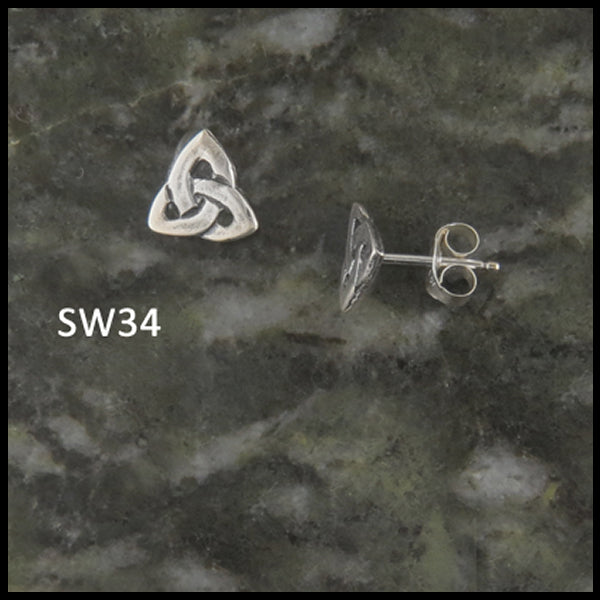
The case of the triquetra or three-fold knot is a good example of the difficulty that one faces when trying to assign specific meaning to Celtic designs. Sacred numbers and the symbolism of numerology offer a promising basis for the interpretation of Early Christian Celtic ornament. The triquetra is an obvious sign of the Holy Trinity. Other knots could represent the four directions, the twelve Apostles and so on. But as important as numbers are in Scripture, legends and poetry, the connection remains elusive and evidence circumstantial.

What the Experts Said

J. Romilly Allen (1903):

"With the exception of the instances at Meigle and at Llanfrynach, in Brecknockshire, the triquetra is used for purely ornamental purposes, and there is not the least foundation for the theory that it is symbolic of the Holy Trinity. If the triquetra knot had ever any symbolical significance at all it was probably in pagan times and in that case it probably had some affinity with the triskele..."

Allen's premise seems to be based on the observation that the triquetra (and other interlace designs) play a decorative role and are not given the prominence of placement that one would assume an important symbol should have.

Françoise Henry (1940):

Regarding a stone slab at Killagtee, Donegal: "This knot stands most probably for the Trinity, and the whole cross seems to be an awkward version of the Chi-Rho..."

Allen opines that the triquetra is not a Trinity symbol and casts doubt that it was used as a symbol at all. Henry suggests that it probably stood for the Trinity, at least in this one case, but leaves the question open. Each of these experts were leading authorities in their day and neither gives a definite answer to the question of meaning for the knot that should be the easiest to explain.

The Triquetra in Modern Times

When the triquetra stands alone it certainly looks like a symbol, but in early Christian Celtic venues it rarely does. If the triquetra had formerly been used as it is now, we would have no reason to doubt its function as a symbol. In modern times it has been customary to display designs alone that would have been details in older work. These stand-alone details are frequently seen in books about Celtic Art or on modern day Celtic craft objects.

When a single knot appears alone, as say a pendant that is a single triquetra, it seems as if it must be a symbol. Given the Celt's penchant for blessings and invoking the Holy Trinity, the meaning of the triquetra seems more obvious than any other knotwork. The triquetra is quite commonly called the "Trinity knot" and has been consciously used as a Christian symbol during the 150 years of the Celtic Revival. In recent decades it has also been appropriated as an emblem of the "Triple Goddess" by Pagan revivalists. When someone plucked the triquetra out of antiquity and it stood alone in modern times, this was a creative act and the triquetra was no longer just a pretty space filler.

From International Style to Symbol of Identity

Celtic interlace, or attempts at something that looked like it have been made in every century since the Insular style first emerged in the 7th century. At first interlace was being used to decorate Gospels and symbols of Christian faith such as crosses. Religious and secular use of Celtic Art cannot be seen as expressing any national identity prior to the Norman invasion, especially when it is recognized that at this time several peoples—the Irish, the Picts, the Scots of Dal Riada and the Northumbrians—all had artists that excelled in the style.

The nearest neighbors, the southern Anglo-Saxons, the Welsh and many continental religious communities also produced manuscript decorations in the Celtic or "Hiberno-Saxon" tradition. During the "Golden Age" of Celtic art, 7th to 10th centuries, the style and vocabulary of ornament was an international style throughout the region.

Decline and Survival

With the Norman invasions of Britain and Ireland, Celtic design went into decline. Traditions of using interlace designs lingered in some of the more Gaelic areas. It eventually became a way of identifying with the older Gaelic cultural tradition in the face of advancing Anglo-Norman power.

In the Hebrides and West Highlands, the Lords of the Isles and other Gaelic aristocrats continued to patronize the carving of interlace decorated monuments as well as portable objects. By the 15th century there was a self-conscious preservation of an older social order with a distinctly Celtic heritage. Knotwork became to a certain extent an emblem of political and cultural identity. Rustic and sometimes very crude attempts at carving knotwork on grave monuments speak of the desire of impoverished but proud Highlanders to imitate the glory of their ancestors.

The Celtic Revival: 19th Century Renaissance

Weapons and jewellery associated with the Jacobite movement continued to be decorated with knotwork until 1745. At this point the longest gap appears in the continuity of use. Little, if any knotwork was produced from then until the dawn of the Celtic Revival in the mid-1800's.

Ireland

The Celtic Revival in Ireland began as an effort to restore a sense of pride in a distinct Irish culture. Objects such as the Book of Kells and the Tara Brooch were concrete evidence that the Irish had once been a sophisticated, civilized society. The re-use of Celtic designs began as imitations of historical jewellery and monuments that were used as an affirmation of Irish identity and an association with the glory of past times.

Scotland

During the same time in Scotland, Queen Victoria was an enthusiastic promoter of a romantic vision of Scottish national identity. Celtic design was slow to catch on in Scotland. Victorian dirks were carved with thistles and clan emblems, rather than the traditional interlace. It was later in the 19th century that knotwork began to add ornaments to tartan. The trend towards Celtic design on Highland dress accessories have slowly but steadily increased to the present.

The earliest Celtic Revival monuments are from the 1860's. In both Scotland and Ireland monumental carving was and remains the most conspicuous uses of Celtic design. Many of the most elaborate earlier monuments of the Celtic Revival are the gravestones of priests. Recognition of the legacy of the Celtic Church was being expressed with the creation of new "High Crosses" both as public monuments and as grave markers.

Common Modern Interpretations

The "Endless Path" Interpretation

A standard answer to the meaning of knotwork question offered by many craftsmen and artists in recent times is that Celtic knots are endless paths and so represent eternity or continuum. The Scottish art teacher George Bain published the book Celtic Art; The Methods of Construction in 1951. This book became a standard reference and source book especially after its re-release in 1971.

In it the author made a great deal of the single continuous path that is laid out in many ancient knotwork panels. This observation leads quite nicely to ideas about the "circle of life" or "never ending… love, faith, loyalty, what ever you want." Many ancient Celtic knots are not a single path, but several closed paths that are linked or woven together. These can be seen as metaphors for the interwoven-ness of life, or linking knots are frequently referred to as "love knots."

Why would it be that continuum would be such an important concept that an elaborate symbology as knotwork would be contrived? In modern times those who maintain an interest in Celtic things, be it Celtic music, dance, religion, folklore or history, may relate to the idea of continuum in their desire to affirm and preserve a culture they value, nobly surviving despite centuries on the margins of European mainstream.

Among Celtic Diaspora, those emigrants and their descendants whose interest in their roots have become a passion are especially likely to relate to a message of continuum as they strive to maintain an identity with their heritage in the multi-cultural melting pot of the New World. If the modern motive for creating or viewing Celtic knotwork involves a sense of heritage, the message of continuum seems to work.

The Enduring Mystery

The "secret language" mystique of Celtic art is what makes it so very fascinating to many who look to it today for significance. Many myths carry a lesson about truth. The myth that every miniscule detail of Celtic art is symbolic, like all genuine folklore, has many variations. The various beliefs that the symbolism is now lost or perhaps dimly remembered or optimistically preserved by a few who have kept and studied the old traditions, cloaks Celtic art in an exciting veil of mystery.

Wear the Mystery: Celtic Knotwork Jewelry

Whether you believe in ancient meanings or modern interpretations, Celtic knotwork connects you to a living tradition spanning 1,400 years. Each piece handcrafted in sterling silver and 14K gold.

Trinity Knot
Three-fold symbolism
Endless Knots
Eternity & continuum
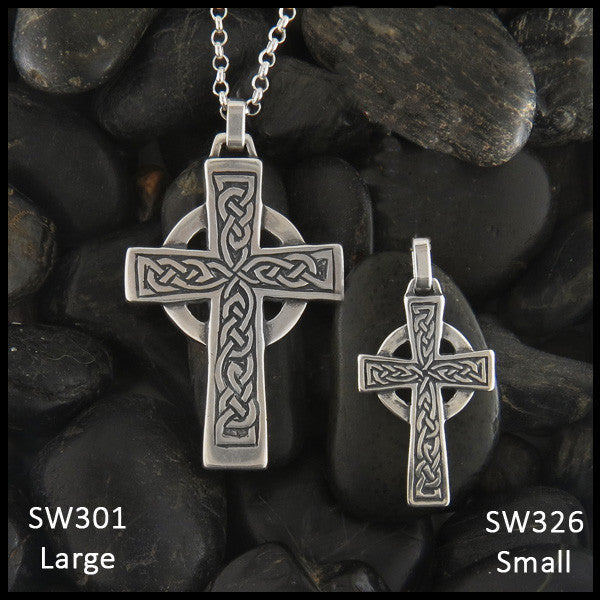
Celtic Crosses
Faith & heritage
Shop Celtic Jewelry → Shop Trinity Knots →

Explore More Celtic History & Symbolism

Stephen Walker

About the Author

Stephen Walker

Stephen Walker is the founder and Master Craftsman at Walker Metalsmiths. With decades of study in Celtic art history and hands-on experience creating traditional designs, Stephen brings both scholarly knowledge and artistic practice to understanding Celtic symbolism.

Note from the author: My thanks to members of Celtic_Art @ eGroups for their discussion and debate of the issues of meaning and symbolism during January 2001. The chance to kick around these ideas with a cross-section of imaginative, passionate and knowledgeable contemporary Celtic artists and designers was of immense value.

Learn more about Stephen & Susan Walker →
Read Stephen's book: "The Modern History of Celtic Jewelry" →

Continue reading